Google Payments Platform
Filter (Consulting for Google) · Mountain View, CA
Role
Senior UX Designer — Payments Platform UX team
Year
Aug 2018 – Apr 2019
Two projects on Google's Payments Platform: eMoney (adding Japan eMoney payment types to GPay across YouTube and Play) and PSD2 Risk Based Authentication (European payment security and fraud prevention protocol 3DS2.0).
- Designed eMoney payment flows for Japan users across YouTube and Play — $46M in incremental revenue.
- Designed PSD2 3DS2.0 risk-based authentication experience across 6+ Google products — influenced the industry standard for European payment security guidelines.
- Met with industry peers from Microsoft and Sony to help define 3DS2.n guidelines for emerging IoT devices like smart TV.
eMoney — Background
The Payments Platform UX team's goal: make sure customers can add and use their favorite payment method with Google Pay. People in different countries have preferred ways to pay. The team worked across 500+ forms of payments, 204 locales, and 1.4 billion people.
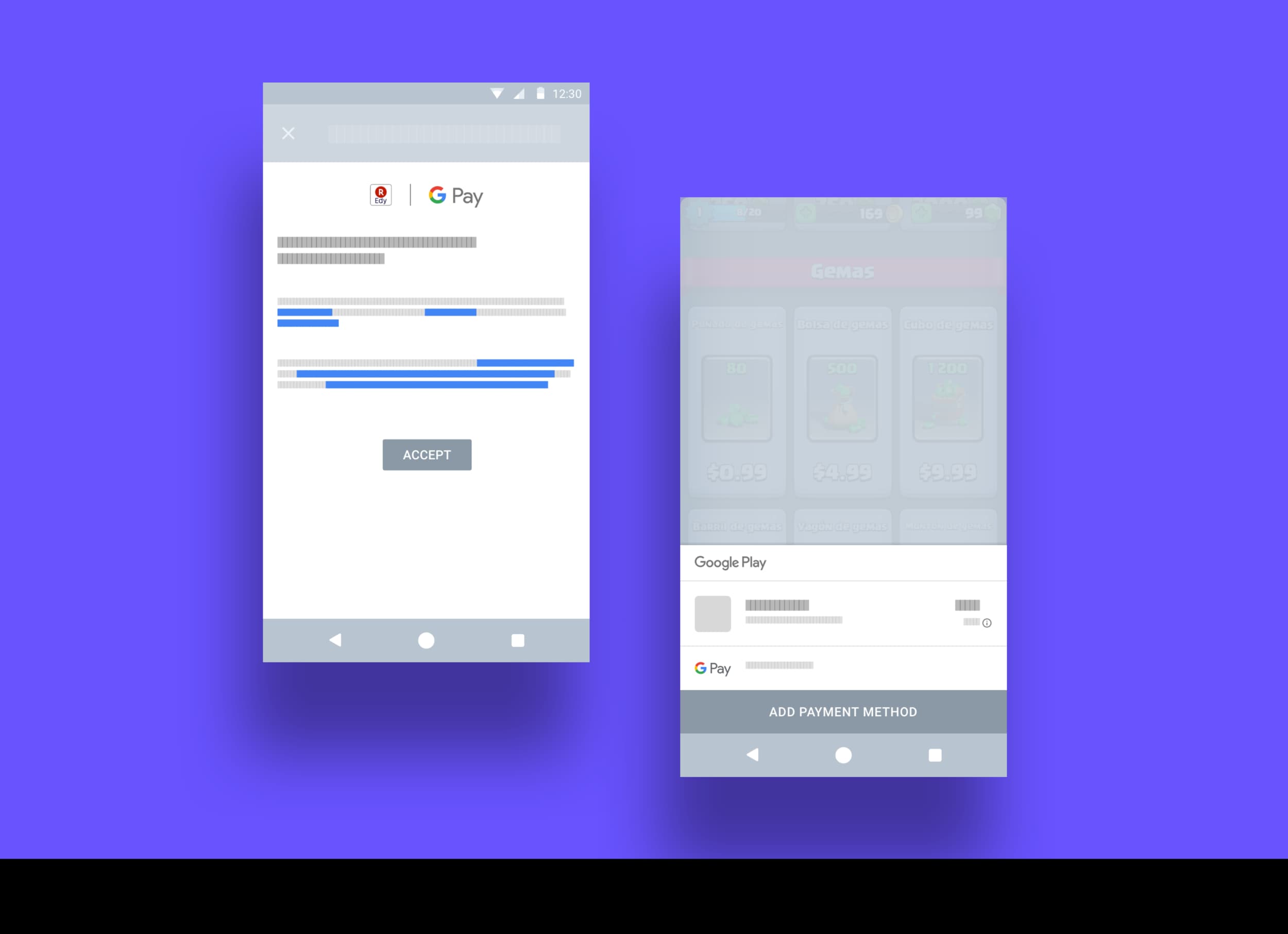
The opportunity: JP users want to use eMoney for digital purchases. eMoney cards are already in user's phones/wallets. Earn/use is a common way to get loyalty points with eMoney. The goal was to add eMoney payment types (Rakuten Edy, WAON, Suica, Nanaco) to GPay so they can make purchases on Google partners like Play and YouTube.
eMoney — Project Challenges
I was brand new, my design teammates were on a research trip. Deadline: 3 weeks. I iterated closely with Content Strategist and Payments PM, and met weekly with Designers and PMs from YouTube, Play, and Payments Engineering team.
I needed to understand how different purchase flows worked and how to customize them for eMoney use — including balance checks, eMoney-specific Terms of Service, chip-on-phone detection, payments profile setup, and funds checks. I overcame challenges by investigating similar projects, leveraging previous YouTube and Play research, and working very closely with PM for domain knowledge.
eMoney — Design Choices
Common authorization challenges included: Terms of Service placement, new payments profile flows, co-branding, pending FoPs (Forms of Payment), and redirect experiences — across over 30 different forms of payment.
Problem: A Terms of Service agreement could appear in different places — sometimes a full screen, sometimes buried behind a link. User may not understand what Terms and Services they are agreeing to. The placement of the Payment profile for new users varies, and so does the order of fields depending on the partner.
Solution: Separate Partner ToS from Payment + Service Provider ToS by introducing Co-Branding. Designed different options — ToS on a new page with Co-Branding, and Inline ToS. Play partner guidelines restricted where GPay Branding occurs within the Play app (only at Checkout), requiring a different approach than YouTube.
Created additional user journeys for: eMoney card to Google (already has cards or not), User associated in GPay (app or not), First time user association + New billing customer, Existing user association, One-off purchase, and User has insufficient funds.
eMoney — Summary and Impact
Adapted to process constraints. Developed strong relationships cross-functionally. Turned design complexity into simplicity. eMoney is now available for Japan users — $46M in incremental revenue and increase of spend for Play customers.
PSD2 — Risk Based Authentication
European Payments Service Directive PSD2 — payment security and fraud prevention protocol 3DS2.0. The goal was to give Google users a safer, secure way to transact with scalable authentication. Protect the good user, present hard challenges to the bad user.
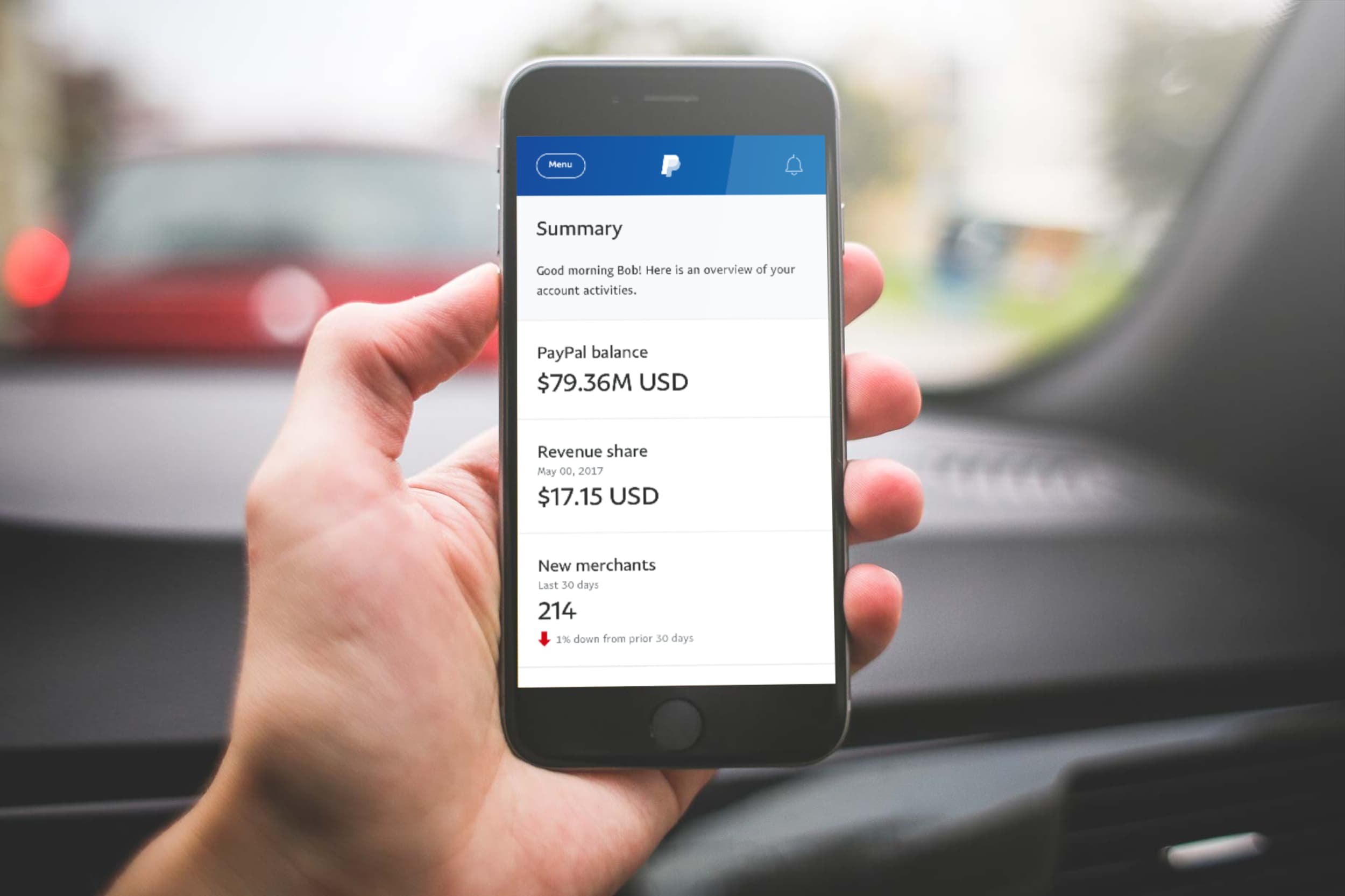
3DS2.0 is a way to provide security to online card transactions. The project would: Build Trust (build the strongest security technologies into our products), be Compliant with European laws (strict user protection laws), and Innovate (lead by example to advance online security for all — PayPal, Apple, Amazon, Microsoft). More data for the issuer to combat fraud and reduce false positives, with the advantage for Google of shifting the liability to the issuer.
PSD2 — Challenges
Understanding the EMVCo (EuroPay Master Visa Consortium) 3-D Secure Protocol specification. Understanding the suite of risk challenges. Deadline: 2 weeks for conceptual mocks involving 6+ Google products across Native, mWeb, and Web.
Designed new standardised 3D Secure challenges to authenticate directly with the Issuer bank: OTP (verify by phone and/or email), Security questions (tighter security), and Out of band (redirect to bank app — fingerprint, FaceID). The new 3DS2.0 experience included Issuer bank + Card network branding zone, Challenge/processing zone, and Help/information zone.
PSD2 — User Journeys
Created OTP risk challenge experiences across the ecosystem for: Play Cart buy flow, GPay P2P, 3P Native buy flow, 3P mWeb buy flow, 3P Web buy flow, and Cloud signup for free trial. Designed Android OS UX/UI including single select, multi select, out of band, HTML/mobile web, loading screen, and text input with OTP auto-fill on Android.
PSD2 — Summary and Impact
Consolidated purchase flows, brought buy-in from product teams and influenced 3DS2.0 guidelines. Met with industry peers from Microsoft and Sony to help define 3DS2.n guidelines for emerging IoT devices like smart TV. Influenced the industry standard for European payment security guidelines. Q3 2019 3DS2.0 Launch.